
Craig the Elephant (c.1972–2026)
When guests reach the Masai Mara as the final destination of their Kenya safari, our conversations often drift south—to Amboseli. They speak about the sheer number of elephants roaming freely, the sense of space, and the wetlands where old bulls move slowly through green swamps beneath Mount Kilimanjaro.
One name comes up again and again: Craig.
Guests will pause at the next stop, pull out their phones, and ask, “Have you ever seen an elephant this big here?”
Today, Kenya has lost one of its greatest living symbols of wilderness and resilience. Craig, the legendary super tusker of Amboseli National Park, has passed away. His life spanned more than five decades and stands as rare proof that with protection, patience, and community stewardship, giants can still walk free.
The Eternal Legacy of Craig: Amboseli’s Gentle Giant
On the morning of 3 January 2026, Kenya quietly lost one of its greatest natural icons. Craig, the legendary super tusker of Amboseli National Park, passed away at the age of 54. His death marked the end of an era—not just for Amboseli, but for elephant conservation across Africa.
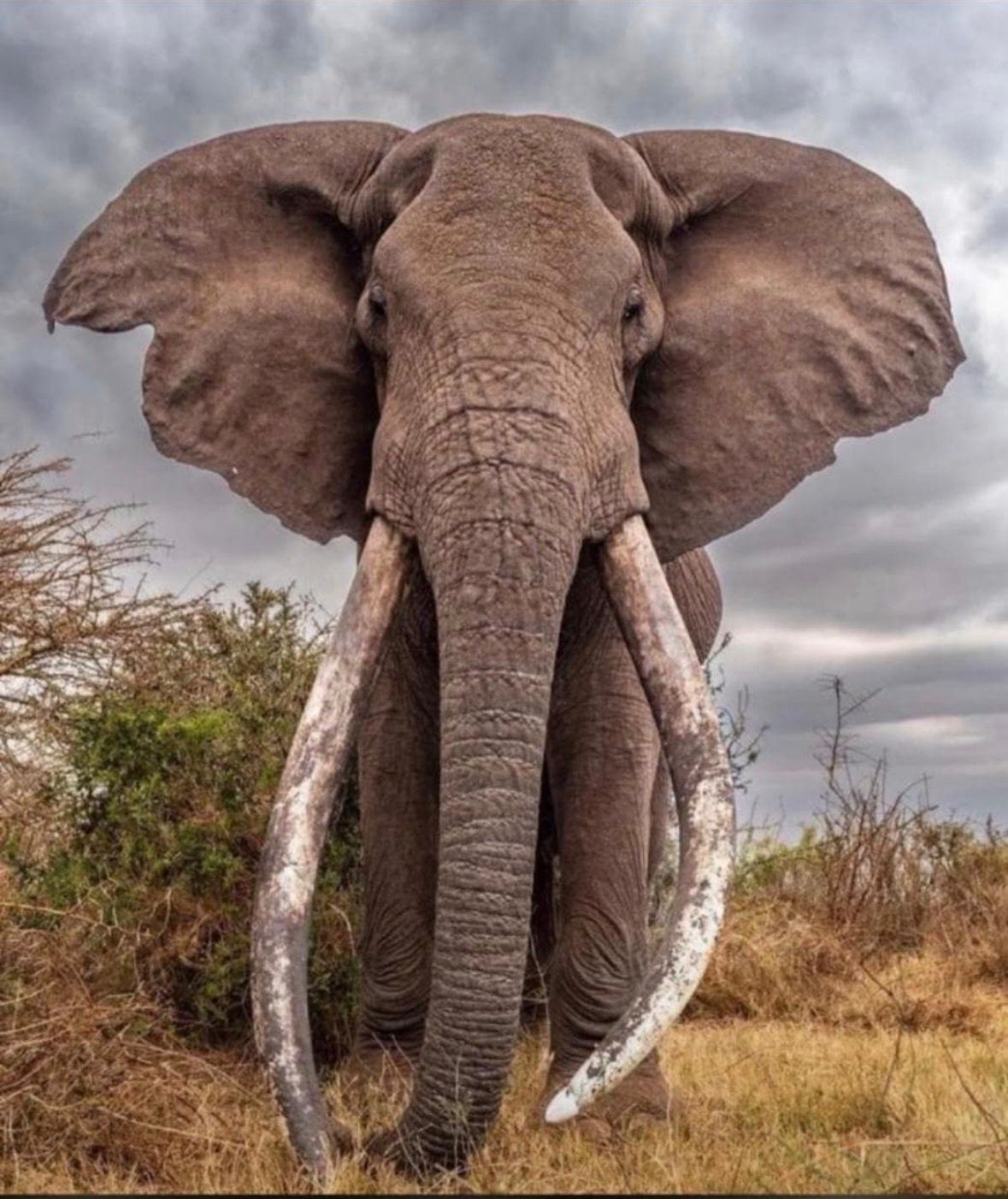
 For more than five decades, Craig moved across the open plains beneath Mount Kilimanjaro with a presence that demanded reverence. His vast, sweeping tusks—among the largest still carried by any living elephant—almost brushed the earth as he walked. To see him in the wild was to witness history breathing.
Craig was not just an elephant. He was a symbol of survival in a continent that has lost too many giants to ivory poaching.
Born Into Legacy: Craig’s Early Life in Amboseli
Craig was born in January 1972, into the well-documented CB family, one of Amboseli’s most prominent elephant lineages. His mother, the matriarch Cassandra, was known for strong leadership and tight family bonds—traits Craig would later reflect in his own calm dominance.
Amboseli, lying in the rain shadow of Kilimanjaro, is a land shaped by contrast: dusty plains broken by permanent swamps fed by underground meltwater from the mountain. It is here that Craig learned the rhythms of elephant life—where to find water in drought, how to move safely between community lands, and how to coexist with humans.
From a young age, Craig’s tusks stood out. They grew longer and heavier than most, early signs of the rare genetics that would one day classify him as a super tusker. As he matured and joined bachelor groups, his temperament became evident. He was calm, unhurried, and remarkably tolerant—qualities that would define his reputation for decades.
 His early years coincided with Kenya’s darkest period for elephants. During the 1970s and 1980s, poaching reduced the national elephant population from over 160,000 to fewer than 20,000. That Craig survived this era is not luck alone—it is a testament to Amboseli’s protection efforts and the communities that stood guard over their wildlife.
A True Super Tusker
Super tuskers are elephants whose tusks each weigh over 100 pounds (45 kg)—a distinction now rarer than white rhinos. Craig’s tusks exceeded this threshold with ease. They were long, thick, and symmetrically curved, sweeping close to the ground and giving him his unmistakable silhouette.
At full maturity, Craig stood over 10 feet tall at the shoulder and weighed close to seven tonnes. Scars along his body told stories of droughts, dominance displays, and decades of survival. His ivory—dense and perfectly formed—would have made him a prime target for poachers, yet he lived his full natural life.
In later years, age began to show. Like all elephants, Craig went through six sets of molars in his lifetime. As his final set wore down, digestion became difficult. Rangers and researchers noticed signs—poorly chewed vegetation, slower movement—but his presence remained powerful to the end.
The Gentle Giant of Amboseli
 Among guides, rangers, and photographers, Craig was known simply as the gentleman. He tolerated vehicles, paused calmly for cameras, and rarely showed aggression. Younger bulls often followed him, learning migration routes between the park and surrounding Maasai community lands.
Craig was a prolific breeder, passing on his rare tusk genetics and calm disposition. In a landscape where big-tusked bulls are often aggressive or short-lived, his temperament was extraordinary.
To stand near Craig was to feel a quiet authority. He did not need to charge or trumpet. His presence alone commanded space.
How Craig Was Protected
Craig’s survival was not accidental. It was the result of decades of coordinated conservation:
Kenya Wildlife Service (KWS) patrols
Long-term research by the Amboseli Trust for Elephants
Anti-poaching operations by Big Life Foundation
Strong cooperation with Maasai communities on Olgulului land
After Kenya’s 1989 ivory ban, protection intensified. Community scouts, aerial surveillance, and intelligence-led patrols ensured Craig remained safe—even as climate change placed new pressure on Amboseli’s fragile ecosystem.
Corporate partnerships, including his symbolic adoption by Tusker Lager, helped fund conservation while turning Craig into a national icon.
A Global Icon
By the 2010s, Craig had become one of Africa’s most photographed elephants. Images of him framed against Kilimanjaro spread across documentaries, Instagram, and global news platforms. For many visitors, seeing Craig was the highlight of their Kenyan safari.
 To the Maasai, he was more than famous—he was part of the land’s story. Elders spoke of him as a guardian spirit, a reminder of coexistence between people and wildlife.
Final Days
In late 2025, Craig’s health began to decline. Rangers monitored him closely as he struggled with digestion. On 2 January 2026, he collapsed several times on community land near Amboseli. Rangers stayed with him through the night.
In the early hours of 3 January, Craig lay down for the final time.
KWS later confirmed that he died of natural causes, consistent with age-related molar wear. He lived exactly as an elephant should—wild, free, and protected.
Mourning a Giant
Tributes poured in from across Kenya and around the world. Conservationists, photographers, tour guides, and ordinary Kenyans shared memories of encounters that had left them speechless. Social media filled with images of Craig beneath Kilimanjaro, his tusks catching the light.
Few wild animals are known by name. Fewer still are mourned like family.
What Craig Leaves Behind
Craig’s genes live on in Amboseli’s herds. His legacy lives in every young bull carrying heavier tusks, in every community scout protecting wildlife, and in every visitor who leaves Amboseli changed.
His life proved something vital: conservation works when people are part of it.
Today, fewer than 25 true super tuskers remain in Africa. Craig’s story reminds us what is at stake—and what is still possible.
Visiting Amboseli Today
Amboseli remains one of Kenya’s most powerful safari destinations. The elephants are still there. The swamps still glow green beneath Kilimanjaro. And if you’re lucky, you may stand where Craig once stood—and understand why he mattered.
Good-Bye Ellie
Craig did not die young.
He did not die hunted.
He died whole, protected, and remembered.
And that may be his greatest legacy of all.
Below is your content restructured into a clear, Google-friendly FAQ format, using strong question-based headings designed to rank for featured snippets and “People Also Ask” results.
Frequently Asked Questions about Craig the Elephant of Amboseli
Who was Craig the elephant of Amboseli?
The Craig elephant of Amboseli was one of Kenya’s most iconic elephants and one of the last remaining true super tuskers in Africa. He lived in Amboseli National Park for more than five decades and was recognised for his immense size, calm temperament, and near ground-sweeping tusks. Craig became a global symbol of successful elephant conservation in Kenya.
Why was Craig the elephant famous in Kenya?
The Craig elephant Kenya became famous for was known for his extraordinary tusks, which each weighed over 45 kilograms, classifying him as a super tusker. His gentle nature, visibility within Amboseli, and survival through decades of poaching made him one of the most photographed and well-known elephants in the country.
Is Craig the elephant still alive?
No. For those asking “Is Craig the elephant still alive?”, Kenya Wildlife Service confirmed that Craig passed away on 3 January 2026. He died of natural causes related to old age, having lived a long and fully protected life in the wild.
What caused the death of Craig the elephant?
The Craig elephant death was attributed to natural causes. Like many old bull elephants, Craig suffered from advanced molar wear, which affected his ability to feed properly. His death was consistent with the natural lifespan of a wild elephant, estimated at 50–60 years.
How tall was Craig the elephant?
At his peak, Craig elephant height measured over 10 feet (approximately 3 metres) at the shoulder, making him one of the tallest elephants ever recorded in Amboseli National Park and one of the largest living elephants in Kenya.
What is a super tusker and why was Craig one?
A super tusker is an elephant whose tusks each weigh more than 45 kilograms (100 pounds). Craig met and exceeded this threshold, placing him among a very rare group—fewer than 25 elephants across Africa are believed to still qualify as true super tuskers.
Why is Craig the elephant important to conservation?
Craig’s life proved that elephant conservation works when governments, communities, and conservation organisations collaborate. His survival through Kenya’s poaching crisis and his long lifespan showed that large-tusked elephants can still thrive when properly protected.
Can visitors still see Craig’s legacy in Amboseli today?
Yes. While Craig himself has passed on, his legacy lives on through his offspring and the healthy elephant population of Amboseli. Visitors can still experience the landscape he once roamed and see younger bulls that carry forward the genetics and calm behaviour he represented.