Do wildebeest cross the Mara River every year?
Yes — animals cross the Mara River every year, but not in the way most people expect.
The crossings are wild, unpredictable, weather-driven, and never guaranteed on specific dates. Some years deliver dramatic mass crossings. Other years are quieter, scattered, and subtle. Yet the migration itself never stops.
Understanding why animals cross, when they cross, and how often they cross is essential if you are planning a Masai Mara safari specifically to witness this phenomenon.
This guide explains the reality of Mara River crossings, cuts through myths, and helps you plan intelligently.
What Is the Mara River Crossing?
The Mara River crossing is part of the Great Wildebeest Migration, the largest overland migration of mammals on Earth. Each year:
-
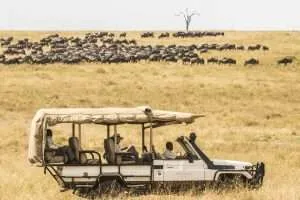
Over 1.5 million wildebeest
-
Hundreds of thousands of zebra
-
Tens of thousands of gazelle
move in a continuous cycle between:
-
Serengeti National Park (Tanzania) and
-
Masai Mara National Reserve (Kenya)
The Mara River lies in their path when the herds move north into Kenya — and later when they return south.
Do Animals Cross the Mara River Every Year?
The Short Answer
Yes. Animals cross the Mara River every year.
The Real Answer
They cross:
-
In different locations
-
On different days
-
In different numbers
-
With different levels of drama
There is no calendar date, no scheduled moment, and no guarantee of a “National Geographic” style crossing on any given day.
Why Do Animals Cross the Mara River?
Animals cross the Mara River for one reason: survival.
Key Drivers
-
Fresh grass availability
-
Instinctive migratory routes
-
Pressure from grazing competition
Wildebeest do not migrate for sightseeing. They move only when food runs out.
The Biggest Myth About Mara River Crossings
Myth:
“If I come in August, I will see a Mara River crossing.”
Reality:
You might.
You also might not.
Some travelers see:
-
3 crossings in one day
Others see:
-
None in 5 days
Both experiences are normal.
When Do Mara River Crossings Usually Happen?
Typical Migration Window
-
Late July to October
But this varies every year.
Month-by-Month Breakdown
July
-
First herds begin arriving in the Mara
-
Some early crossings occur
-
River levels may still be low
-
Crossings are scattered and unpredictable
August
-
Peak migration presence
-
Highest chance of crossings
-
River often full
-
Crocodile activity at its peak
-
Most crowded month in the Mara
September
-
Excellent crossing opportunities
-
Slightly fewer crowds than August
-
Grass still abundant
-
One of the best months overall
October
-
Late crossings still happen
-
Herds begin moving south
-
Fewer mass crossings
-
More relaxed safari atmosphere
Do Crossings Happen Every Day During Migration Season?
No.
Crossings happen:
-
When herds decide to move
-
Often after hours or days of waiting
-
Sometimes multiple times at the same spot
-
Sometimes not at all
You may sit by the river for:
-
20 minutes
-
2 hours
-
Half a day
And still see nothing.
Then suddenly — chaos.
Why Crossings Are So Unpredictable
1. Wildebeest Psychology
Wildebeest are cautious animals.
-
One animal moves → panic spreads
-
One animal retreats → entire herd retreats
This hesitation can last hours or days.
2. Rainfall Patterns
Rain dictates grass growth.
-
Heavy rains in Serengeti = delayed crossings
-
Early rains in Mara = earlier crossings
No two years are identical.
3. River Levels
-
Low water = quieter crossings
-
High water = dramatic crossings
-
Flooded river = delayed crossings
4. Predators
-
Crocodiles
-
Lions
-
Hyenas
Predator presence can stop or trigger crossings.
Do Animals Cross Back Again?
Yes.
The migration is circular, not one-way.
After grazing in the Masai Mara:
-
Herds move south
-
They cross the Mara River again
-
Often in October
These return crossings are:
-
Less crowded
-
Less publicized
-
Just as authentic
Are There Multiple Crossing Points?
Yes — and this is critical.
Major Crossing Areas in Masai Mara
-
Mara Triangle
-
Serena crossing points
-
Lookout Hill area
-
Kichwa Tembo region
-
Remote western sections
Herds do not use one fixed crossing location.
This is why:
-
A good guide matters
-
Location of your camp matters
-
Staying longer increases your odds
How Often Do Crossings Happen in a Season?
In a strong migration year:
-
Dozens of crossings occur
-
Spread over weeks
-
Across multiple locations
In a weaker year:
-
Fewer crossings
-
Smaller groups
-
Longer waiting periods
But crossings always occur somewhere.
What Animals Cross the Mara River?
Primary Crossers
-
Wildebeest (main drivers)
-
Zebra (often lead crossings)
Secondary Species
-
Gazelle
-
Topi
Predators do not migrate, but:
-
Crocodiles wait
-
Lions patrol riverbanks
-
Hyenas follow herds
Are Crocodiles Always Present?
Yes.
The Mara River is home to:
-
Large Nile crocodiles
-
Some over 4 meters long
They are:
-
Territorial
-
Patient
-
Extremely effective predators
However:
-
Not every crossing involves an attack
-
Many animals cross safely
Do All Crossings Look Dramatic?
No.
Some crossings are:
-
Slow
-
Calm
-
Small groups
-
No predator interaction
Others are:
-
Explosive
-
Chaotic
-
Dust, panic, noise
-
Survival at its rawest
Social media shows the extreme moments — not the full reality.
Is Seeing a Mara River Crossing Guaranteed?
No safari operator can guarantee a crossing.
Anyone who does is being dishonest.
What can be guaranteed:
-
Migration presence (in season)
-
Excellent wildlife density
-
Predator action
-
Authentic safari experience
How Long Should You Stay to Increase Your Chances?
Recommended Stay
-
Minimum: 3 nights
-
Ideal: 5–7 nights
Why longer stays matter:
-
More game drive hours
-
More flexibility
-
Ability to move between crossing points
-
Less pressure and disappointment
Short stays = gambling
Longer stays = strategy
Does Camp Location Matter?
Absolutely.
Staying:
-
Near the Mara River
-
Or in the Mara Triangle
increases your chances significantly.
However:
-
Herds move
-
Camps closer today may be far tomorrow
Again — flexibility is key.
Is the Mara River Crossing the Only Reason to Visit Masai Mara?
No — and this is a common mistake.
Even without crossings, Masai Mara offers:
-
Exceptional lion sightings
-
Cheetah hunts
-
Leopard encounters
-
Open plains photography
-
Year-round wildlife
Some of the best safaris happen outside crossing season.
Best Months to Visit If Crossings Are Your Priority
Ranked realistically:
-
August
-
September
-
Late July
-
October
But remember:
-
Crowds peak in August
-
Prices are highest during this period
Best Months If You Want Fewer Crowds and Still Great Wildlife
-
January – March
-
June
-
November
No river crossings — but outstanding safari quality.
Should You Plan Your Entire Safari Around a Crossing?
No.
Plan for:
-
Overall wildlife experience
-
Time in the Mara
-
Camp quality
-
Guide expertise
If you see a crossing, it becomes a bonus — not a source of stress.
Answer: Do Animals Cross the Mara River Every Year?
Yes.
Animals cross the Mara River every year as part of the Great Wildebeest Migration.
But:
-
Not on a fixed schedule
-
Not at guaranteed locations
-
Not in the same numbers
-
Not with the same drama
The crossing is a natural event, not a performance.
Those who understand this enjoy the Mara far more than those chasing a single moment.
Key Takeaway for Safari Planners
If your dream is to see a Mara River crossing:
-
Travel between late July and September
-
Stay at least 5 nights
-
Choose your camp location wisely
-
Trust experienced local guides
-
Accept uncertainty
That uncertainty is exactly what makes the Masai Mara real.