


Through the Eyes of a Local Guide: Lessons from the Mara
A few days ago, a video from the Maasai Mara went viral. It showed tourists stepping out of their vehicles at Purungat Bridge, standing dangerously close to the wildebeest crossing. For us who work here every day, this was not only shocking but deeply disappointing. Such behavior goes against the very rules that keep both people and wildlife safe.
Yes, the government is now cracking down on rogue operators and unqualified guides. That is a step in the right direction. But there is another side to this story that we need to talk about honestly: the pressure some tourists put on their guides.
Chaos at the Mara: Tourists Block Wildebeest Crossing, Authorities Respond
The Maasai Mara was thrust into the spotlight this week after a video went viral showing tourists on foot obstructing a wildebeest crossing during the peak of the Great Migration.
The footage, first shared by conservation group Cheetah Guardians on August 19, showed visitors jumping out of safari vehicles at Purungat (South) Bridge and crowding dangerously close to the riverbank, leaving barely a meter between themselves and the wildebeest. Some tourists were even accused of forcing animals back into the crocodile-filled river, putting both humans and wildlife at risk.
Outrage quickly spread online, with critics slamming the behavior as “chaos without management, no rules or limits, unethical guides, negligent rangers, and reckless tourists.”
Wildlife photographer Nick Kleer echoed the frustration, recalling similar incidents where dozens of vehicles obstructed migration routes:
“These ancient migration routes, shaped by instinct and generations of survival, were blocked by humans who should know better. The herds were forced to scatter. Some ran for cliffs and jumped in panic,” he said.
The Pressure to Perform
Every season, guests arrive in the Mara with great expectations. They’ve seen documentaries, photos, and videos of wildebeest plunging into crocodile-filled rivers. They want to witness the same spectacle—and sometimes they want it on demand. What they don’t always realize is that the Mara does not work on schedules.
Animal behavior may be predictable to an extent, but it is never choreographed. The Great Migration is not a theatre show where we can raise a curtain at 10 a.m. and cue the herds to cross. You can spend four days here during peak migration and not witness a single river crossing. On another trip, you might arrive on your very first morning and be lucky enough to see thousands pour across. That’s the beauty—and the mystery—of the Mara.
A Lesson from the Field
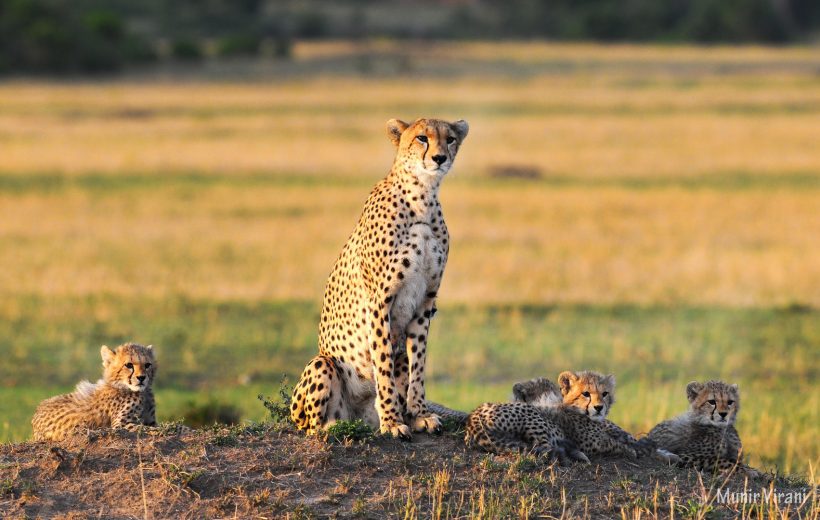
I remember one safari where we stopped at a spot with a coalition of cheetahs. From my experience, I knew they were preparing to hunt. I told my clients we would wait. After some time, they grew restless. They asked why we were just sitting and insisted we move on to find something “more interesting.”
Reluctantly, I drove away. We saw a few lions sleeping under a tree, then headed for bush breakfast. As we were eating, a call came over the radio: the cheetahs had just made a successful hunt and were feeding. My guests were frustrated, but the lesson was clear. Sometimes, patience is the key to the most unforgettable moments. And sometimes, trusting your guide makes all the difference.
The Bigger Picture
The Great Wildebeest Migration—a yearly journey of nearly two million wildebeest, zebras, and gazelles across the Serengeti-Mara ecosystem—remains the crown jewel of East Africa’s safari circuit. The animals face natural challenges: crocodile-infested rivers, predators, and grueling distances. But increasingly, human interference has emerged as a new threat.
The recent uproar serves as a stark reminder: the survival of the migration depends not only on instinct and resilience but also on responsible tourism practices.
That is why I strongly condemn the actions of the tourists who stepped out of their vehicles during the crossing. The Mara is wild and unpredictable. Standing at the riverbank not only endangers your own life but also disrupts the natural flow of the animals. It is reckless, dangerous, and simply wrong.
Respect the Wild
If you come to the Mara, come with an open mind. State your expectations, yes—but allow us as guides to lead the way. We are here every day, we know the land, and we read the behavior of the animals. We cannot control nature, but we can help you experience it as it is meant to be: raw, spontaneous, and real.
The Great Migration is one of the last true spectacles of the natural world. Let’s not destroy it with impatience or reckless demands. Let’s honor it by respecting the rules, respecting the guides, and above all, respecting the animals.


