


Masai Mara vs Serengeti
There is a long-standing debate in East African safari circles: Masai Mara National Reserve vs Serengeti National Park – which is better?
As a local safari guide who has guides in Masai Mara and visited Serengeti, I’ve been asked this question more times than I can count. And I’ll tell you the truth the way we discuss it in the field—not the polished version you see in brochures.
Both are extraordinary.
Both are part of the same living ecosystem.
But they do not deliver the same safari experience.
And yes, among guides, there’s a running joke about the Serengeti…
“In the Serengeti, sometimes you don’t see wildlife—you are asked to imagine it.”
It sounds like exaggeration, but once you understand the scale of the Serengeti, you begin to see where that comes from.
Now contrast that with the Masai Mara—where you can barely drive ten minutes without something unfolding in front of you.
Let’s break this down properly.
No marketing.
No romance.
Just ground truth from someone who has sat behind the wheel in both places.
First, Understand This: Scale vs Density
The Serengeti is enormous. It stretches across northern Tanzania in a way that feels endless. You can drive for hours and still feel like you’ve only touched a fraction of it.
The Masai Mara, on the other hand, is compact—around 1,500 km²—but incredibly rich in life.
This single difference shapes everything:
-
In the Serengeti, you cover distance
-
In the Mara, you cover sightings
In the Serengeti, your day often feels like a journey.
In the Mara, your day feels like a sequence of encounters.
The Guide’s Joke About the Serengeti (And Why It Exists)
Let me paint a real picture.
You’re on a game drive in the Serengeti.
You’ve been driving for 30–40 minutes.
Then the guide stops.
Points far into the distance.
“Those shapes… those are lions.”
Guests squint. Some raise binoculars. Some pretend they see them clearly.
And yes—those are lions.
But they’re far.
Very far.
This isn’t because the Serengeti lacks wildlife. It’s because wildlife is spread across a massive landscape.
Also, strict off-road driving rules in many parts of the Serengeti mean you often cannot approach closely. You stay on tracks. You wait. You observe from a distance.
Now compare that with the Mara.
In the Masai Mara, you don’t always “find” lions.
You sometimes drive into them.
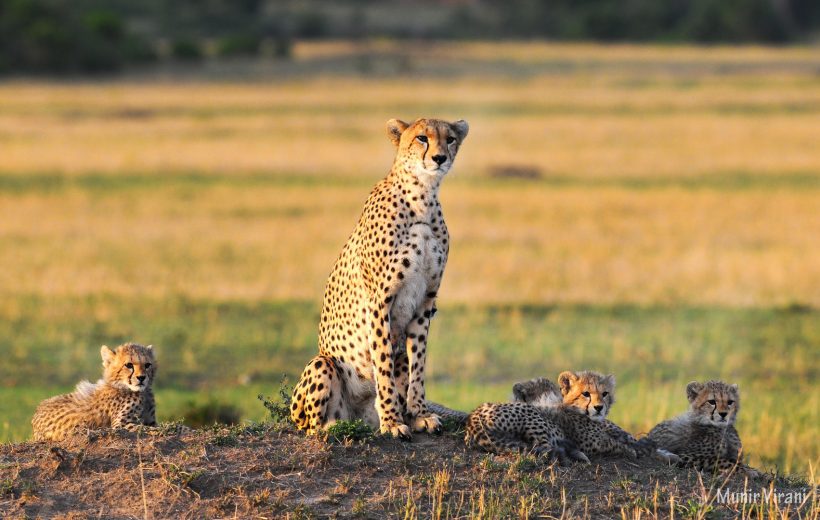
You stop for elephants, and 200 meters later there’s a cheetah scanning the horizon. Another 5 minutes, a hyena clan is circling a fresh kill.
This is not a lucky day.
This is a normal day.
1. Wildlife Density – Where the Mara Clearly Wins
If you strip everything else away, this is the core truth:
The Masai Mara has one of the highest predator densities in Africa.
In a single morning drive, it is realistic—not optimistic—to see:
-
Cheetahs hunting or scanning termite mounds
-
Leopards draped over acacia trees
-
Elephants moving in family groups
-
Buffalo herds numbering in the hundreds
-
Hyenas trailing predators
In the Serengeti, you can absolutely see all of this.
But not as quickly.
Not as consistently.
And not as tightly packed.
You work harder for sightings in the Serengeti.
In the Mara, sightings come to you.
Verdict: Masai Mara wins on wildlife density—clearly and consistently.
2. The Game Drive Experience (Flow Matters More Than You Think)
A safari is not just about what you see.
It’s about how it unfolds.
In the Masai Mara:
-
Drives are shorter between sightings
-
Action is frequent
-
There is constant anticipation
-
You spend more time watching behavior than searching
In the Serengeti:
-
Drives are longer
-
Sightings are spaced out
-
You experience quiet, open stretches
-
There is more “in-between time”
Some experienced safari travelers actually enjoy that stillness.
But for most guests—especially first-timers—that silence can feel like nothing is happening.
In the Mara, something is always happening.
Even when it seems quiet, it rarely stays that way.
Verdict: Masai Mara offers a more engaging and rewarding game drive rhythm.
3. The Great Migration – Same Event, Different Experience
The Great Migration moves through both ecosystems.
But the experience is very different depending on where you are.
In the Serengeti:
-
The migration is vast and dispersed
-
Herds stretch across the horizon
-
Movement is continuous but less concentrated
In the Masai Mara (especially July–October):
-
Herds gather at river crossing points
-
Tension builds at the banks
-
Crocodiles wait below
-
Predators position strategically
-
Crossings happen suddenly—and violently
This is where the Mara becomes cinematic.
You’re not just observing migration.
You’re inside the moment where survival decisions are made.
Dust, noise, panic, instinct—it all happens at once.
Verdict: Masai Mara delivers more intense and dramatic migration moments.
4. Completing the Safari Experience (Time vs Impact)
One of the most honest things I tell guests is this:
“In the Masai Mara, you can feel like you’ve seen Africa in three days.”
Because within a short stay, you can realistically experience:
-
Big cats in action
-
Open savannah landscapes
-
River crossings (in season)
-
Birdlife and smaller species
-
Sunrise and sunset drives
-
Cultural encounters with the Maasai people
In the Serengeti, you often need more time to reach that same sense of completeness.
Not because it lacks anything—but because everything is spread out.
Verdict: Masai Mara delivers a complete safari faster and more efficiently.
5. Accommodation Options and Flexibility
The Masai Mara ecosystem is surrounded by conservancies and access points, which creates a wide range of accommodation:
-
Budget camps just outside the reserve
-
Mid-range tented camps
-
Ultra-luxury safari lodges
-
Private conservancy experiences
You can choose based on budget, style, or location.
In the Serengeti:
-
Lodges are more spread out
-
Many are deep inside the park
-
Transfers are longer
-
Costs are generally higher due to logistics
This doesn’t make Serengeti accommodation worse—just less flexible.
Verdict: Masai Mara offers more variety and better pricing flexibility.
6. First-Time Safari Travelers – Where Should You Go?
This is where the answer becomes very practical.
For someone going on their first safari:
The Masai Mara is easier to understand.
-
Wildlife appears quickly
-
Sightings are frequent
-
There is less waiting
-
The experience feels “rewarding” almost immediately
The Serengeti requires patience.
It rewards those who appreciate landscape, scale, and subtlety.
But for a first safari?
Most people want to see animals.
And they want to see them well.
Verdict: Masai Mara is the best choice for first-time safari travelers.
7. The Role of the Guide (And Why It Matters More in the Mara)
Guiding is not just about driving.
It’s about positioning, timing, and communication.
In the Masai Mara:
-
Guides operate in tighter zones
-
Communication between vehicles is faster
-
Sightings are shared quickly
-
Movement patterns are easier to track
In the Serengeti:
-
Distances are larger
-
Communication is more spread out
-
You rely more on timing and luck
Also, many highly experienced guides work within Mara conservancies year-round. They know individual lions, territories, and behavior patterns.
That level of familiarity changes your experience.
Verdict: Masai Mara offers stronger, more coordinated guiding experiences.
8. Hot Air Balloon Safaris – Same Concept, Different Energy
Both parks offer balloon safaris.
But the feeling is not the same.
In the Serengeti:
-
You float over vast, empty plains
-
The experience is peaceful and scenic
-
Wildlife may appear distant
In the Masai Mara:
-
You can drift directly over herds
-
Predators are visible from above
-
Morning mist over rivers creates dramatic light
-
Landings often happen near active wildlife zones
It’s not just scenic—it’s dynamic.
Verdict: Masai Mara offers a more visually and emotionally engaging balloon experience.
9. Accessibility – Time Is Part of the Safari
How quickly you reach wildlife matters more than people think.
Masai Mara:
-
About 1-hour flight from Nairobi
-
4–5 hours by road
-
Wildlife sightings begin almost immediately
Serengeti:
-
Requires multiple flight legs or long transfers
-
Travel time eats into safari time
-
You often need extra days just for logistics
If you are working with limited time, this becomes a major factor.
Verdict: Masai Mara is far more time-efficient.
10. The Emotional Difference (The One That Stays With You)
This is something you cannot measure on paper.
But it’s the one guests remember most.
The Masai Mara feels immediate.
-
Wildlife is close
-
Encounters are frequent
-
Action unfolds around you
-
You feel part of the ecosystem
The Serengeti feels expansive.
-
You observe from a distance
-
You absorb the scale
-
You appreciate the landscape
Both are beautiful.
But they create different emotional responses.
The Mara is intense.
The Serengeti is contemplative.
Most first-time and short-stay travelers connect more deeply with intensity.
Verdict: Masai Mara wins on emotional impact.
So… Masai Mara vs Serengeti – Who Really Wins?
Let’s be honest, as guides who know both:
-
The Serengeti is vast, iconic, and ecologically critical
-
The Masai Mara is concentrated, dramatic, and experience-driven
But when it comes to:
-
Wildlife density
-
Game drive consistency
-
Migration intensity
-
Time efficiency
-
First-time safari success
-
Emotional impact
The Masai Mara wins.
Not because the Serengeti is lacking.
But because the Mara delivers more, in less time, with greater consistency.
Make the Move
If you have the luxury of time—visit both. You might want to do it at a separate time. Start with Masai Mara.
They are part of the same living system, and together they tell the full story of East Africa’s wilderness.
But if you only have a few days…
If you want a safari that feels alive from the moment you arrive…
If you want to see, not search…
Go to the Masai Mara.
Because in the Mara, wildlife is not something you look for in the distance.
It’s something that unfolds right beside you.


