


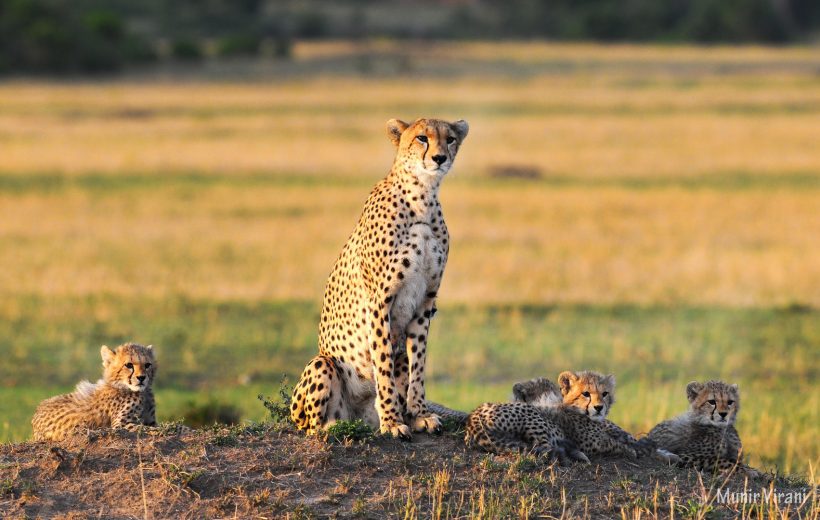
 January in the Masai Mara marks a season of renewal. Following the short rains of November and December, the plains are lush and green, providing plenty of grazing for herbivores. Wildebeest, zebras, and antelopes can be seen grazing, while predators such as lions and cheetahs remain highly active, taking advantage of the abundance of prey. The skies are alive with movement as migratory birds from Europe and Asia make their seasonal stop in the Mara, further enriching the already diverse birdlife. The striking blue verbenas and bright yellow hibiscus flowers bloom across the plains, offering a stunning contrast against the golden grasslands.
January: Warm and Dry Start to the Year
The weather in the Masai Mara in January is typically dry with warm temperatures ranging from 20°C to 30°C (68°F to 86°F). This is an excellent time for game drives, as the sparse vegetation makes it easier to spot wildlife. With fewer tourists, you can experience the beauty of the Mara in tranquility. While the rains aren’t in full swing yet, expect the occasional light shower.
- Rainfall: January sees less rainfall compared to December, with an average of around 15 rainy days, often characterized by brief afternoon showers.
- Temperatures: Daytime temperatures hover around 28°C, while nights cool down to approximately 12°C.
- Best for Birdwatching: January is one of the best months for birdwatching, with migratory species arriving in large numbers. It is also the birthing season for many herbivores, making it an ideal time to witness young animals taking their first steps and navigating the early challenges of survival in the wild. The lush vegetation and clear skies provide spectacular photography opportunities, particularly in the early mornings and late afternoons.
 Out on the golden plains of the Masai Mara, the grass remains lush but starts to shorten in patches as grazing animals thrive. The landscape is alive with movement—zebras, impalas, and gazelles raise their young, while predators take advantage of the abundance of prey. The air is thick with the hum of insects, and dazzling African monarch butterflies drift between the acacias. Along the riverbanks, pods of hippos laze in the water, while fish eagles soar above, their calls echoing through the valley. The striking flame lilies begin to bloom, adding bursts of red and orange to the scenery.
February: Perfect for Wildlife Viewing
February sees similar weather to January, with warm and dry conditions, ideal for wildlife viewing. Temperatures during the day range from 22°C to 30°C (72°F to 86°F), and there’s very little rain. Many animals in the Masai Mara, including wildebeests, zebras, and gazelles, give birth around this time, offering a rare opportunity to witness newborn wildlife on the plains. This is also one of the best months to visit for birdwatching, as migratory birds are abundant.
- February experiences slightly less rainfall than January, with an average of 10 to 12 rainy days. Showers are usually brief and in the late afternoon, leaving the mornings and evenings clear for game drives. Temperatures are warm, reaching highs of 29°C during the day and dropping to around 13°C at night.
- February is an excellent time for wildlife photography, with dramatic skies and a golden glow over the savannah. It’s also peak predator season, as big cats take advantage of the vulnerable newborns. Birdwatchers will enjoy spotting both resident and migratory species, with European storks and kingfishers being particularly prominent. The dry conditions also make it easier to spot elusive animals such as leopards and servals in the thinning vegetation.
 March marks the transition into the long rainy season in the Masai Mara. The landscape remains lush from the earlier short rains, but the frequency and intensity of showers begin to increase. The fresh greenery continues to sustain herbivores, with large herds of wildebeest, zebras, and elephants roaming freely. Predators, including lions, cheetahs, and leopards, remain highly active, using the dense vegetation for cover as they stalk their prey. The Mara River and seasonal waterholes brim with water, drawing hippos and crocodiles to their depths.
March: The Arrival of the Short Rains
By March, the weather in Masai Mara Kenya starts to shift. You can expect some short rains, with temperatures ranging from 21°C to 29°C (69°F to 84°F). These rains, however, don’t usually interfere with game drives, and the landscape begins to take on a lush, green hue, which makes for beautiful photographs. Wildlife is still plentiful, but some animals may be a bit harder to spot due to the thickening vegetation.
- Rainfall becomes more frequent in March, with an average of 18 to 20 rainy days, often bringing afternoon or evening showers. Temperatures remain warm, with daytime highs of 27°C and nighttime lows around 14°C.
- March is an exciting time for birdwatchers as migratory species prepare to depart, and resident birds begin their breeding season. The abundance of water and fresh vegetation makes it a great month for spotting amphibians, insects, and smaller mammals. The occasional stormy sky also provides dramatic backdrops for wildlife photography, capturing the untamed beauty of the Mara in this dynamic season.
 April is the peak of the long rainy season in the Masai Mara, with frequent, often heavy downpours that transform the landscape into a vibrant tapestry of greenery. The rains bring lush vegetation, providing abundant food for herbivores, and large herds of wildebeest, zebras, and elephants continue to roam the plains. The predators, such as lions, cheetahs, and leopards, remain active, using the dense foliage to their advantage as they hunt. The Mara River, swollen from the rains, creates dramatic scenes with hippos and crocodiles basking or navigating the water.
April: Peak of the Rainy Season
- April is the heart of the rainy season in the Masai Mara. Heavy rains are common, with temperatures ranging from 20°C to 27°C (68°F to 81°F). While this may not be the most popular time for safaris, it offers a quieter experience with fewer tourists.
- The rain brings life to the Mara, transforming the landscape into a vibrant green haven. Wildlife tends to spread out across the park, but the rains also provide an opportunity to see animals in a completely different light. Plus, the Mara’s flora is lush and beautiful, making for a peaceful, picturesque environment.
- April sees the most rainfall, with an average of 20 to 22 rainy days, often in the form of afternoon or evening showers. Temperatures are mild, with daytime highs around 26°C and cooler nighttime lows of 13°C.
- This month is ideal for birdwatchers, as migratory species are still visible before their departure, while resident birds are in full breeding mode. The rich vegetation and water sources attract a variety of amphibians, insects, and smaller mammals, making April a great month for wildlife enthusiasts.
- The stormy skies and dramatic weather also provide stunning opportunities for capturing the power and beauty of the Mara’s wild landscape.
 May is the heart of the long rainy season in the Masai Mara, with the landscape at its lushest and most vibrant. The rains continue to be frequent, often intense, and the plains are covered in thick, green grass. Large herds of wildebeest, zebras, and elephants still graze the fertile land, while the predators—lions, cheetahs, and leopards—are well-camouflaged in the dense vegetation as they continue to hunt. The Mara River remains full, providing the perfect habitat for hippos and crocodiles, and seasonal waterholes overflow, attracting other wildlife in search of water.
May: Transition into Dry Weather
- By May, the rains begin to subside, although occasional showers are still possible. Temperatures range from 20°C to 28°C (68°F to 82°F). This is a great time for visitors who want to avoid crowds while still enjoying lush scenery.
- While the game viewing can be slightly more challenging due to the dense vegetation, the landscape is stunning and vibrant, perfect for nature lovers and photographers alike.
- Rainfall peaks in May, with up to 23 rainy days, typically in the form of afternoon or evening showers. The daytime temperatures are cooler, with highs around 25°C and lows dipping to 12°C at night.
- The abundant rainfall and lush surroundings make May an excellent month for birdwatching. Migratory birds are still around, while residents continue their breeding season. The wet conditions also bring out amphibians, insects, and smaller mammals, offering great opportunities for photographers and nature lovers.
- The dramatic skies and rainy atmosphere create a mystical backdrop for capturing the beauty of the Mara in its raw, untamed state.
 June marks the start of the dry season in the Masai Mara, with the rains tapering off and the landscape beginning to dry out. The grasslands are still lush from the earlier rains, providing ample food for herbivores like wildebeest, zebras, and gazelles. As the rains retreat, predators such as lions, cheetahs, and leopards become more visible and active, often seen hunting along the plains. The Mara River continues to flow, though its level starts to decrease, and waterholes remain critical gathering points for wildlife.
June: Start of the Dry Season and Migration Preparations
June marks the official start of the dry season in the Masai Mara. The weather is cooler, with temperatures ranging from 15°C to 25°C (59°F to 77°F). The rains have subsided, and the landscape is drier, making it easier to spot wildlife. This month also marks the beginning of the wildebeest migration, as herds start moving from the Serengeti into the Masai Mara. The dry weather allows for fantastic game drives and clear skies, making it one of the best months for a safari.
- June sees a decrease in rainfall, with about 8 to 10 rainy days, typically brief afternoon showers. The daytime temperatures are mild, with highs around 25°C, and nighttime lows around 11°C.
- June is a fantastic month for wildlife viewing, as the dry season starts to make game spotting easier, with animals congregating around water sources. The cooler, drier weather makes it an excellent time for safari-goers to enjoy clear skies and better visibility of wildlife. Birdwatching is still rewarding, with migratory species beginning to leave, while resident species continue their activities in full swing.
 July is a highlight of the year in the Masai Mara, marking the beginning of the dry season and the peak of the Great Migration. The landscape, having dried out from earlier rains, takes on a golden hue, with short grasses making it easier to spot wildlife. The cooler temperatures and clear skies create perfect conditions for safari adventures, making it one of the most popular months to visit the Mara. It’s a time of excitement as thousands of wildebeest, zebras, and gazelles from the Serengeti flood into the Mara, seeking fresh grazing grounds. Predators—lions, cheetahs, and leopards—are highly visible, actively stalking the herds, and the wildlife watching is at its peak.
July: High Season for Safari Adventures
July is one of the most popular months to visit the Masai Mara, and for good reason. The weather is warm but not overwhelmingly hot, with temperatures between 16°C and 26°C (61°F to 79°F). The dry season is in full swing, and wildlife is concentrated around waterholes and rivers, making it easier to spot animals. July is also the height of the Great Migration, and witnessing the dramatic river crossings is one of the most thrilling experiences a safari enthusiast can have.
- July experiences little to no rainfall, with an average of 4 to 5 dry days throughout the month, making it one of the driest times of the year. Temperatures are mild, with daytime highs around 24°C and cool, crisp nights dipping to around 10°C.
- The Mara is alive with activity in July, as the Great Migration reaches its dramatic peak. The herds of wildebeest and zebras cross the Mara River, creating one of nature’s most iconic and breathtaking spectacles. Watching the wildebeest leap into the river, only to be met by lurking crocodiles, is an unforgettable moment that draws photographers, wildlife enthusiasts, and travelers from all over the world.
- For birdwatchers, July offers an exciting opportunity as the skies are filled with resident species, and migratory birds from Europe begin arriving. It’s also an excellent time to observe the interactions between different species as they gather around waterholes, seeking refuge from the heat. The Mara’s dramatic landscapes, with their vast open plains and scattered acacia trees, provide the perfect backdrop for capturing stunning photos.
- The dry season also means fewer mosquitoes and a more comfortable safari experience, with the lack of rain contributing to better game visibility. Wildlife becomes more concentrated around the remaining water sources, making for incredible close-up encounters. Whether you’re on a game drive or a guided walk, the combination of cooler temperatures, abundant wildlife, and spectacular scenery makes July one of the most rewarding months to explore the Masai Mara.
 August in the Masai Mara is nothing short of magical. The dry season is in full swing, with the landscape bathed in golden hues, offering the perfect canvas for unforgettable wildlife experiences. The air is crisp and clear, making it a prime time to explore the Mara’s vast plains, where the drama of nature unfolds before your eyes. As the Great Migration continues, the herds of wildebeest and zebras remain a dominant presence, their silhouettes moving like a river across the savannah. The atmosphere is charged with excitement, as the predators—lions, cheetahs, and leopards—are fully in their element, capitalizing on the abundance of prey.
August: Migration in Full Swing
August is another prime month for safaris in the Masai Mara. The weather remains warm with temperatures ranging from 17°C to 26°C (63°F to 79°F). The Great Migration is at its peak, and visitors can witness one of nature’s most spectacular events as thousands of wildebeests and zebras cross the Mara River in search of fresh grazing. The dry conditions make game viewing excellent, and with clear skies, you’ll be able to capture breathtaking photographs of the Mara’s wildlife and stunning landscapes.
- Weather: August sees almost no rainfall, with the skies often bright and cloudless. Daytime temperatures are pleasantly warm, hovering around 24°C, while the nights are cool and refreshing, dropping to around 9°C.
- The Great Migration: This month is the peak of the Great Migration, a time when the wildebeest, zebras, and gazelles are still crossing the Mara River in large numbers. The river crossings are a spectacle of raw nature—thrilling, dramatic, and sometimes heart-stopping—as the herds face the dangers of crocodiles and swift currents. Witnessing these crossings is a once-in-a-lifetime experience, with the energy of the herds and the tense atmosphere around the river making for incredible moments that will stay with you forever.
- Game Viewing: For safari-goers, August offers unparalleled game viewing. The dry conditions cause the animals to gather around the few remaining waterholes, making it easier to spot wildlife. Lions can often be seen lounging in the shade, while cheetahs prowl the plains in search of their next meal. Leopards, elusive yet captivating, are also more likely to be spotted, their stealthy movements blending seamlessly with the environment.
- Birdlife: The birdlife in August is just as captivating, with both resident and migratory species adding to the Mara’s colorful palette. Whether you’re an avid birdwatcher or simply enjoy the sight of birds soaring above, the skies are alive with activity during this time.
- Photography: The landscape, bathed in soft light and vast open spaces, offers perfect opportunities for photography. The combination of rich, dry grasslands and dramatic skies creates the ideal backdrop for capturing the raw beauty of the Mara, where every moment feels like a masterpiece waiting to be preserved.
 September is a dream come true for wildlife enthusiasts and travelers seeking the perfect safari experience in the Masai Mara. The dry season continues, and the landscape remains beautifully golden, with the grass low and game sightings becoming even easier. The air is crisp, and the clear skies make for ideal safari conditions, where every moment feels more vivid and alive. As the Great Migration nears its peak, the vast herds of wildebeest, zebras, and gazelles are still filling the Mara, crossing the river in a dramatic crescendo of nature’s raw beauty. The predators are on high alert, with lions, cheetahs, and leopards capitalizing on the abundance of prey.
September: Ideal for a Safari Experience
September is one of the best months to visit the Masai Mara. Temperatures remain in the comfortable range of 16°C to 25°C (61°F to 77°F), and the dry weather continues. The wildlife is still concentrated around water sources, making game viewing superb. The Great Migration is nearing its end, but the herds are still around, giving you the chance to see some incredible action. Fewer tourists during this time mean you can enjoy a more relaxed and intimate safari experience.
- Weather: September remains dry, with little to no rainfall, and daytime temperatures are pleasantly warm, averaging 25°C. The nights are cool, dipping to around 10°C, making for a comfortable and refreshing atmosphere throughout your stay.
- The Great Migration: The Great Migration reaches its most exhilarating point in September, with the herds continuing to cross the Mara River. The river crossings are at their most spectacular, with thousands of wildebeest, zebras, and gazelles braving the waters and evading predators—especially crocodiles—who lurk below the surface. Watching these crossings, and the dramatic interactions that unfold, is one of nature’s most mesmerizing events.
- Game Viewing: September is an excellent time for wildlife viewing in general, as the animals tend to gather around the remaining waterholes, making it easier to spot them. Lions often stalk the herds, and cheetahs sprint across the plains in search of their next meal. Leopards, with their stealthy grace, blend into the acacia trees or lounge in the shade, offering thrilling sightings for those with a keen eye.
- Birdlife: Birdwatchers will also be delighted, as migratory species continue to pass through the Mara, adding a burst of color to the skies. The abundance of prey and water attracts a variety of bird species, making September an exciting time to observe the Mara’s rich avian life.
- Photography: The beauty of the Mara in September is undeniable, with clear skies, golden plains, and lush acacia trees framing the landscape. The dry conditions and excellent visibility offer perfect conditions for photography, where every shot feels like a masterpiece—whether it’s a lion in the tall grass or a stunning sunrise over the plains.
 October in the Masai Mara marks a beautiful transition into the late dry season. The landscape is still bathed in warm golden hues, and the skies remain clear and brilliant. The weather is perfect for game drives, as the dry conditions make it easier to spot wildlife amidst the low grass and sparse trees. The Great Migration is nearing its end, but the Mara is still buzzing with action. Herds of wildebeest, zebras, and gazelles spread across the plains, while predators—lions, cheetahs, and leopards—take advantage of the abundance of prey.
October: Warm Days and Beautiful Skies
October is the last month of the dry season, with temperatures ranging from 18°C to 28°C (64°F to 82°F). The vegetation is sparse, making it easier to spot animals, and the skies are clear and beautiful. The Great Migration may have started moving south again, but the Masai Mara still offers fantastic opportunities for wildlife viewing. This month is ideal for those who prefer a less crowded safari experience.
- Weather: Generally dry, with minimal rainfall and average daytime temperatures around 26°C. The nights are cool, dipping to around 11°C—perfect for relaxing after a day of adventure.
- Wildlife Viewing: As the land dries, animals concentrate around the few remaining water sources, making it easier to spot big cats and other predators like lions, cheetahs, and leopards. The cooler weather also makes for more comfortable game drives.
- Birdwatching: Migratory species pass through the Mara, adding to the avian diversity.
- Atmosphere: Peaceful and serene, with golden plains stretching beneath bright blue skies—every moment feels like a masterpiece.
 November in the Masai Mara ushers in the early rains, bringing a refreshing change after the dry months. The first showers, often brief but heavy, transform the plains into a vibrant mix of green and gold. The rains revive the vegetation, offering a beautiful contrast to the dry season. Herbivores like wildebeest, zebras, and gazelles thrive in the newly lush grasslands, while predators remain active, taking advantage of the plentiful food.
November: Short Rains and a Quiet Experience
November sees the arrival of short rains, with temperatures ranging from 20°C to 27°C (68°F to 81°F). The rains are brief but can create a lush environment, making it a great time for a quieter, more peaceful safari experience.
- Rainfall: Around 12 to 15 rainy days, often in the form of afternoon or evening showers. Daytime temperatures hover around 24°C, with cooler nights at 13°C, offering a refreshing atmosphere.
- Wildlife Viewing: The wildlife begins to spread out across the lush plains, and predators like lions, cheetahs, and leopards are highly visible as they hunt in the green landscape.
- Birdwatching: Migratory birds arrive in greater numbers, filling the skies with vibrant species.
- Atmosphere: The skies are dramatic, with dark rainclouds giving way to bursts of sunshine, creating stunning photography opportunities. The atmosphere is serene, with fewer tourists and a vibrant, blooming wilderness.
 December in the Masai Mara is a delightful blend of the wet and dry seasons. The early rains have transformed the landscape into a lush, vibrant paradise. The plains are now rich and green, offering a fresh environment for the wildlife. The weather is pleasantly warm, with cool evenings, making it an ideal time for a safari. The holiday season brings a sense of calm and serenity, making it a magical time to explore the Mara.
December: Rainy Yet Vibrant
December marks the start of the rainy season, with temperatures ranging from 21°C to 28°C (69°F to 82°F). The rains bring a sense of peace and beauty to the Mara, even though the thick vegetation can make game viewing more challenging. The holiday season brings an uptick in visitors, but it’s still a wonderful time to experience the Mara’s magic.
- Rainfall: December typically sees a mix of sunshine and showers, with around 10 to 12 rainy days, often in the afternoon or evening. Temperatures average 26°C during the day, while nights dip to around 14°C, providing a refreshing break.
- Wildlife Viewing: The fresh vegetation provides a haven for herbivores like wildebeest, zebras, and gazelles. Predators like lions, cheetahs, and leopards remain active, using the cover to stalk prey.
- Birdwatching: Fantastic, as migratory birds arrive in large numbers, filling the skies with vibrant species.
- Atmosphere: The fresh rains bring out a wide variety of smaller wildlife, from insects to amphibians. The dramatic skies, with bursts of sunshine, make for breathtaking moments, especially during sunrise and sunset. The landscape is alive with color, making December a peaceful, magical time to visit.


