


What Animals Will I See during a Masai Mara Safari?
A Realistic, Honest Wildlife Guide for First-Time and Returning Safari Travelers
When clients come in most of the time they will ask “what shall we?” My answer is always the same. I don’t know what we will see but I promise you we will see something.
The Masai Mara is not a zoo.
It is a vast, open ecosystem where wildlife moves freely, seasons change behavior, and every safari unfolds differently.
That is precisely why it remains one of Africa’s most rewarding safari destinations.
If you are planning a safari to the Masai Mara, one of the first questions you will ask—rightly so—is:
“What animals will I actually see?”
This guide answers that question honestly and accurately, based on:
-
Long-term wildlife data
-
Typical safari routes
-
Seasonal movements
-
Daily game drive patterns
-
Real guest experiences, not marketing promises
By the end, you will know:
-
Which animals are almost guaranteed
-
Which ones are very likely
-
Which are possible but not assured
-
Which sightings are rare and special
-
How to dramatically improve your chances
Understanding Wildlife Sightings in the Masai Mara
Before listing animals, it is important to understand how safari sightings work.
The Masai Mara Ecosystem
The Masai Mara is part of the greater Serengeti–Mara ecosystem, spanning Kenya and Tanzania. Animals are not confined to one area. They move based on:
-
Rainfall
-
Grass quality
-
Predator–prey dynamics
-
Breeding cycles
This means:
-
Some animals are resident year-round
-
Some are seasonal
-
Some roam widely and unpredictably
Why No One Can Promise “All Animals”
Any operator who guarantees you will see everything is not being honest.
However, the Masai Mara is exceptional because:
-
Animal density is high
-
Visibility is excellent (open grasslands)
-
Predator populations are strong
-
Guides communicate sightings daily by radio
This makes it one of the most reliable safari destinations in Africa.
The Big Picture: What You Are Most Likely to See
On a typical 2–3 night safari with two game drives per day, most travelers will see:
-
Large herds of zebra and wildebeest
-
Multiple species of antelope
-
Elephants almost daily
-
Giraffes daily
-
Buffalo daily
-
At least one big cat species
-
A wide variety of birds
With 3 nights or more, sightings expand significantly.
The Big Five in the Masai Mara
The Masai Mara is home to all members of the Big Five.
1. Lion – The Star of the Mara
The Masai Mara has one of the highest lion densities in Africa.
-
Lions live in large, visible prides
-
They hunt in open plains
-
They are active during morning and evening game drives
It is common to see:
-
Lions resting under trees
-
Cubs playing
-
Lionesses hunting
-
Males defending territory
Lions are the most reliably seen big cat in the Mara.
2. Leopard – Elusive but Present
Leopards are solitary, stealthy, and territorial.
They prefer:
-
Riverine forests
-
Thick bush near rivers like the Mara River and Talek River
Sightings depend heavily on:
-
Guide experience
-
Time spent near leopard territories
-
Patience
A good guide increases your chances dramatically.
3. Elephant – Gentle Giants
The Mara’s elephants are relaxed and habituated to vehicles.
You will see:
-
Breeding herds with calves
-
Large bulls moving alone
-
Elephants crossing plains and rivers
They are active throughout the day and easy to spot.
4. Buffalo – The Quiet Constant
African buffalo are everywhere:
-
In herds
-
Near water
-
On open plains
They may not seem exciting at first—but seeing thousands of them in natural formations is impressive.
5. Rhino – Rare but Possible
Black rhinos exist in the Masai Mara, but:
-
They are few in number
-
They are shy
-
They stay in thick bush
Seeing a rhino is considered a bonus sighting, not an expectation.
Big Cats Beyond the Big Five
Cheetah – The Sprinting Icon
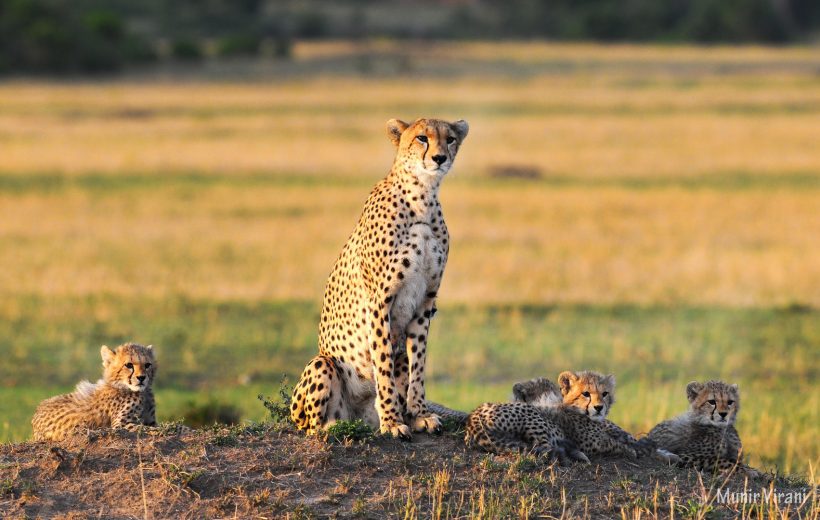
The Masai Mara is one of the best places in Africa to see cheetahs.
Why?
-
Open grasslands suit their hunting style
-
Abundant prey
-
Less competition than in forested parks
You may see:
-
Solo males
-
Mothers with cubs
-
High-speed hunts (rare but unforgettable)
Serval & Caracal – Rare Sightings
These smaller cats exist but are:
-
Nocturnal or crepuscular
-
Extremely shy
Sightings are uncommon but possible with luck.
Plains Game: The Foundation of the Mara
These animals form the backbone of the ecosystem and are seen daily.
Wildebeest
-
Over 1.5 million migrate annually
-
Present year-round in varying numbers
-
Massive herds during migration season (July–October)
Zebra
-
Travel with wildebeest
-
Highly visible
-
Excellent for photography
Giraffe (Masai Giraffe)
-
Tall, elegant, and calm
-
Seen browsing acacia trees
-
Present throughout the reserve
Antelope Species
You will see several species, including:
-
Thomson’s gazelle
-
Grant’s gazelle
-
Topi
-
Coke’s hartebeest
-
Impala
-
Eland (Africa’s largest antelope)
Hippos & Crocodiles
Hippopotamus
-
Found in rivers and pools
-
Seen daily near the Mara River and Talek River
-
Most active at night
Nile Crocodile
-
Ancient predators
-
Famous for migration river crossings
-
Often seen basking on riverbanks
Hyenas, Jackals & Other Predators
Spotted Hyena
-
Highly intelligent
-
Very common
-
Active day and night
Jackals
-
Black-backed and side-striped
-
Often seen hunting small prey
Bat-Eared Fox
-
Occasional sightings
-
More common in certain areas
Birdlife: The Often Overlooked Treasure
The Masai Mara has over 450 bird species.
You may see:
-
Secretary birds
-
Martial eagles
-
Lilac-breasted rollers
-
Vultures
-
Ostriches
-
Hornbills
-
Bee-eaters
Birdlife is exceptional year-round, especially after rains.
Animal Sightings Probability Table (Estimated)
Important: These percentages reflect the likelihood of seeing the animal on a 2–3 night safari with two daily game drives and a competent guide.
| Animal | Estimated Sighting Probability |
|---|---|
| Lion | 95–99% |
| Elephant | 95–98% |
| Buffalo | 95–99% |
| Giraffe | 98–100% |
| Zebra | 100% |
| Wildebeest | 95–100% |
| Spotted Hyena | 90–95% |
| Cheetah | 60–75% |
| Leopard | 40–60% |
| Hippo | 90–95% |
| Crocodile | 70–85% |
| Topi | 85–95% |
| Impala | 95–100% |
| Eland | 50–65% |
| Rhino | 5–10% |
| Serval / Caracal | <5% |
How Season Affects What You See
January – March
-
Excellent weather
-
Fewer tourists
-
Predator sightings remain strong
-
Calving season attracts predators
April – May
-
Lush landscapes
-
Fewer vehicles
-
Slightly harder to spot animals in tall grass
-
Excellent birdlife
June – October (Migration Season)
-
Peak wildlife density
-
River crossings (not daily, but possible)
-
Higher chances of dramatic predator action
-
More visitors
November – December
-
Short rains refresh the plains
-
Good balance of wildlife and fewer crowds
What Improves Your Chances of Seeing More Animals
-
Stay Inside or Near the Reserve
Reduces drive-in time and maximizes wildlife exposure. -
Choose a Good Guide, Not Just a Nice Camp
A skilled guide can double your sightings. -
Do Morning and Evening Game Drives
This is when predators are active. -
Stay at Least 2–3 Nights
One night is rarely enough. -
Avoid Overloaded Vehicles
Fewer guests = better positioning and patience.
Setting the Right Expectations
A successful safari is not about ticking boxes.
It is about:
-
Watching lions interact as a family
-
Seeing elephants raise their young
-
Observing predators and prey share the same space
-
Witnessing raw, unscripted nature
Some guests see everything.
Some see fewer species but deeper behavior.
Both are authentic safari experiences.
Is the Masai Mara Worth It?
If your goal is:
-
High wildlife density
-
Excellent predator sightings
-
Iconic African landscapes
-
Reliable safari experiences
Then yes, the Masai Mara remains one of the best safari destinations in the world.
It does not promise perfection.
It delivers reality—and reality here is extraordinary.


